Publié le
Pourquoi la plupart des plateformes de commerce B2B freinent la croissance des marques en gros
Contributeurs

Orderchamp
3 minutes de lecture

In this article
Pour les marques de gros modernes, le commerce électronique n’est pas seulement un canal, c’est une composante essentielle de la stratégie de croissance. Mais bien trop souvent, les outils censés soutenir cette croissance deviennent des obstacles. Des interfaces peu ergonomiques, des intégrations coûteuses et des workflows obsolètes rendent la montée en charge plus difficile, et non plus simple.
La vérité, c’est que la plupart des plateformes B2B ont été conçues soit pour un autre public, soit pour une autre époque. Elles ne suivent pas le rythme du commerce de gros moderne : dynamique, fondé sur la relation et de plus en plus numérique.
Alors, qu’est-ce qui ne va pas, et que devraient rechercher les marques dans une plateforme qui soutient réellement la montée en charge ?
Le décalage entre les besoins B2B et la réalité du commerce électronique
Le commerce de gros est un modèle de vente complexe et très relationnel, qui diffère considérablement de la vente directe au consommateur. Pourtant, de nombreuses plateformes de commerce électronique B2B sont des versions allégées de systèmes B2C ou des solutions héritées surdimensionnées. Voici où la plupart des configurations montrent leurs limites.
1. Plateformes B2C adaptées après coup au B2B : trop chères
Des plateformes comme Shopify ou Shopware ont été conçues pour les consommateurs. Bien qu’elles proposent désormais des offres entreprise ou des plug-ins B2B, celles-ci sont généralement réservées à des niveaux tarifaires coûteux. Les coûts commencent souvent autour de 2 500 € par mois, sans compter la personnalisation ou le développement.
Même dans ce cas, l’expérience utilisateur n’est pas conçue pour les acheteurs de gros. Les détaillants peinent à s’adapter à des parcours orientés retail, et les marques s’appuient sur des contournements ou des outils externes pour gérer des processus B2B simples.
2. Piles e-commerce dépendantes des plug-ins : peu transparentes et inadaptées
Certaines marques construisent leur propre configuration B2B à l’aide de plateformes flexibles comme WooCommerce ou Magento. Au départ, cela peut sembler agile et rentable, avec des plug-ins ajoutant des fonctions spécifiques comme la commande en gros ou l’accès restreint.
Mais à mesure que la pile technologique s’étoffe, la charge de maintenance augmente également. Les plug-ins peuvent se casser, entrer en conflit avec les mises à jour et créer des risques de sécurité. Avec le temps, les équipes se retrouvent dépendantes des développeurs rien que pour maintenir les opérations essentielles.
3. Plateformes héritées conçues pour l’entreprise : trop compliquées
À l’autre extrémité se trouvent les plateformes B2B traditionnelles comme Sana, Propeller et Optimizers. Ces outils sont riches en fonctionnalités (parfois même trop complexes) et souvent conçus pour de grands grossistes, voire pour des entreprises. Ils sont donc généralement coûteux, complexes et lourds à maintenir.
Pour les marques de taille intermédiaire, ils s’accompagnent de courbes d’apprentissage abruptes, d’interfaces utilisateur dépassées et de délais de mise en œuvre longs, ce qui engendre des coûts. La tarification est généralement pensée pour des budgets d’entreprise, et la rigidité rend difficile le maintien d’une approche agile sur un marché en constante évolution.
Le problème n’est pas la complexité, c’est le décalage
Le commerce de gros comporte une certaine complexité, mais cela ne signifie pas que votre plateforme doive l’être. Le problème n’est pas que le commerce B2B soit trop complexe à prendre en charge, c’est que la plupart des systèmes ne sont pas conçus en tenant compte des réalités du commerce de gros.
Vous vous retrouvez soit à payer pour des fonctionnalités que vous n’utilisez pas, soit à assembler différents outils pour répondre à vos besoins. Cela crée des inefficacités, des coûts cachés et des frictions, tant pour votre équipe que pour vos partenaires de distribution.
Ce qu’une plateforme B2B moderne devrait réellement offrir
Une véritable plateforme B2B moderne devrait être conçue dès le départ pour servir les marques de gros. Elle devrait prendre en charge un large éventail de flux de travail sans nécessiter de développement sur mesure ni de maintenance constante.
Recherchez une plateforme qui inclut :
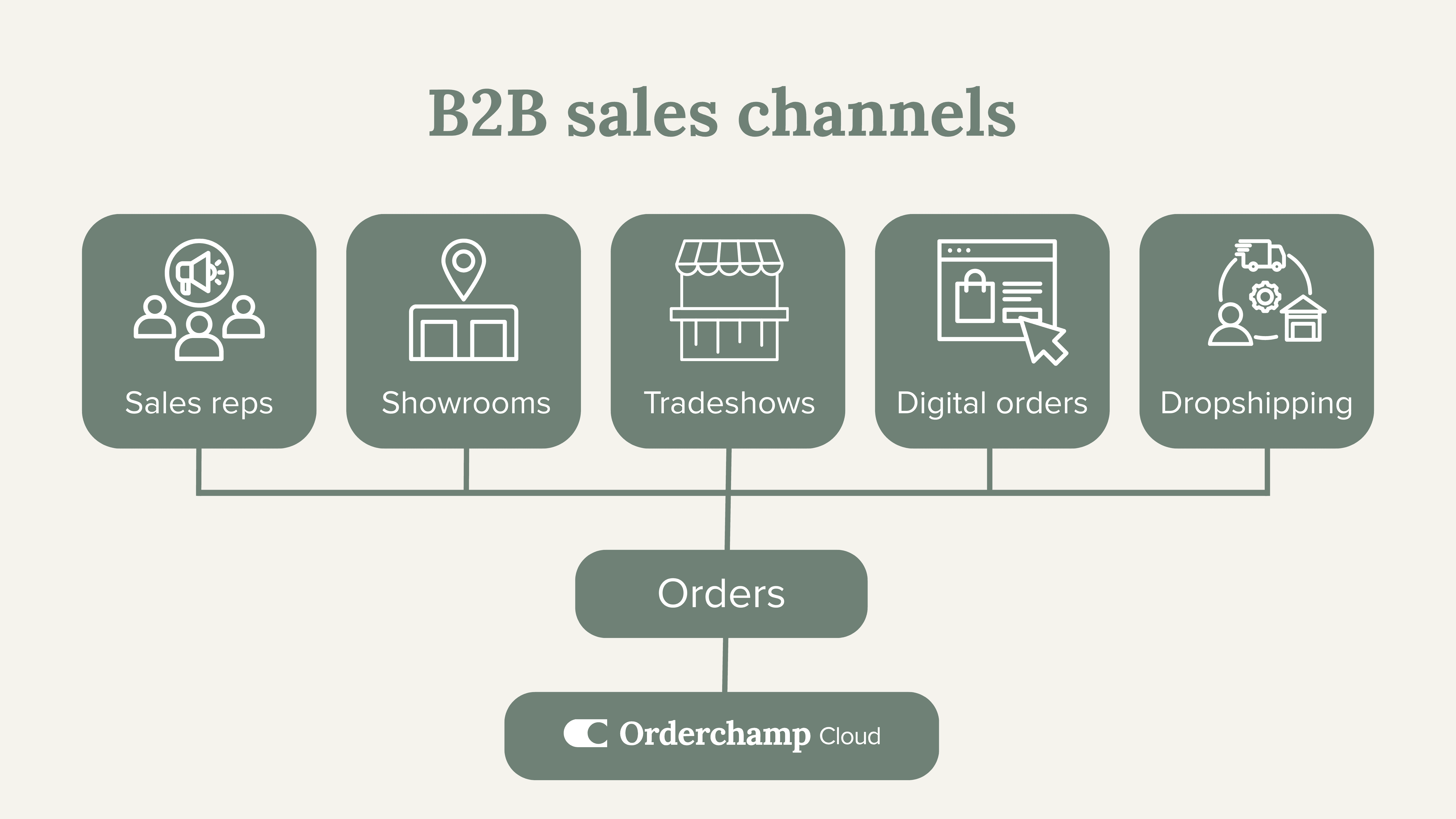
La prise en charge de plusieurs types et méthodes de commande, y compris la prise de commandes par des commerciaux, en showroom et lors de salons professionnels
du dropshipping intégré, avec des catalogues et un routage des commandes automatisés
des portails en libre-service pour faciliter les réassorts des détaillants
la saisie automatisée des commandes, ou même l’ingestion, pour traiter efficacement les commandes par téléphone et par e-mail
des tableaux de bord unifiés pour une visibilité complète sur les clients, les canaux et les commerciaux
des fonctionnalités B2B flexibles, comme une tarification spécifique par client et des paiements de gros adaptés aux groupes de clients
Tout cela doit être intuitif, accessible et prêt à l’emploi - sans bricolage nécessaire.
Comment Orderchamp Cloud aborde le B2B différemment
Orderchamp Cloud a été conçu spécialement pour les marques de gros en croissance. Plutôt que d’adapter des systèmes grand public ou des logiciels d’entreprise, nous avons créé une plateforme pensée pour cet usage qui simplifie chaque aspect des ventes B2B.
Voici comment nous faisons les choses différemment :
Une plateforme unique et unifiée pour les ventes sur Marketplace, les commandes directes, Dropshipping et votre propre B2B Portal de marque
Une prise en main rapide grâce à une configuration sans code
Une expérience intuitive pour les marques comme pour les détaillants
Une tarification transparente, fondée sur la valeur, sans frais cachés, commissions ni frais d’installation
Des fonctionnalités B2B évolutives qui grandissent avec votre activité
Tout ce dont vous avez besoin est regroupé au même endroit. Pas de plug-ins, pas de maintenance, pas de mauvaises surprises.
Repensez votre stratégie de commerce B2B
Si votre plateforme actuelle vous semble restrictive, décousue ou excessivement complexe, il est peut-être temps de simplifier. La bonne plateforme devrait réduire les frictions, et non en ajouter. Elle devrait aider votre équipe à aller plus vite et rendre votre marque plus accessible aux acheteurs.
Avec Orderchamp Cloud, nous pensons que les marques de gros méritent des outils aussi dynamiques et faciles à utiliser que les entreprises qu’ils soutiennent. Nous avons conçu une plateforme pour soutenir votre croissance, simplifier vos flux de travail et vous permettre de vous concentrer sur ce qui compte le plus : vos clients.
Éssayez Orderchamp Cloud


Découvrez si Orderchamp Cloud passe pour ton entreprise
Planifiez les prochaines étapes

Découvrez Orderchamp Sales App : transformez chaque moment de vente en commande
Annonces
Orderchamp
Lecture de 5 min

Comment conclure davantage de commandes de gros lors des visites commerciales
Stratégie de vente en gros
Orderchamp
5 min de lecture
L'essor du commerce de gros en libre-service : comment les détaillants préfèrent acheter aujourd'hui
Perspectives du secteur
Orderchamp
5 min de lecture