Publié le
Pourquoi présenter les bons produits aux acheteurs B2B est plus important que jamais
Contributeurs

Orderchamp
Lire en 3 min

In this article
Wholesale businesses are changing fast. What used to work: a single, comprehensive catalog for all buyers — is becoming less effective in an increasingly segmented and digital market.
Today, B2B brands sell across regions, channels, and buyer types. They serve everything from large key accounts to small retailers, dropshipping partners, and international buyers — each with different needs and expectations. And yet, many brands still present their entire product range to every customer.
While this one-size-fits-all approach may seem efficient, it often results in missed opportunities and unnecessary friction in the buying process.
The growing challenge of one-size-fits-all catalogs
A typical catalog might include hundreds (if not thousands) of products. But are all of them relevant for every buyer?
A buyer in France might see items that aren’t even shippable to their region.
A boutique owner may browse product lines intended for mass retail.
A dropshipping partner could be overwhelmed by assortments they can’t use.
This isn’t just about poor user experience, it’s also about lost sales. When buyers are shown products that don’t match their context, they’re more likely to abandon their search or place smaller, less confident orders.
And the problem doesn’t stop there:
It complicates inventory and logistics by misaligning expectations.
It creates unnecessary support questions (“Can I sell this in my market?”).
It can even undermine a brand’s positioning by showing the wrong products to the wrong people.
Why this problem is growing and not going away
As more B2B transactions move online, this issue becomes more visible. Many systems solve this with ranking or recommendations, but this doesn’t solve the entire problem, as products can still be reached through search, and usually it’s not that customer-specific. Research shows that B2B buyers increasingly prefer self-service channels, and expect the same level of clarity and relevance they experience when shopping via sales reps, in showrooms on tradeshows.
At the same time:
Product assortments are becoming more complex
Regional regulations are tightening
Direct-to-retailer models like dropshipping are gaining traction
Large clients often expect exclusivity or tailored ranges
In other words, the need for catalog flexibility is increasing and not decreasing.
A practical shift: tailoring product visibility by customer type
The solution isn’t to shrink your catalog, it’s to make it smarter.
More and more B2B brands are starting to segment their assortments. Instead of showing everything to everyone, they define who sees what based on the buyer’s profile.
For example:
Retailers in certain regions only see locally available items
Premium clients have early access to new launches
Dropshipping partners get a curated, simplified product set
This approach not only reduces friction but also improves conversion, strengthens buyer relationships, and supports a more strategic go-to-market.
Of course, doing this manually is time-consuming, and often not scalable.
How software can help — without overhauling your business
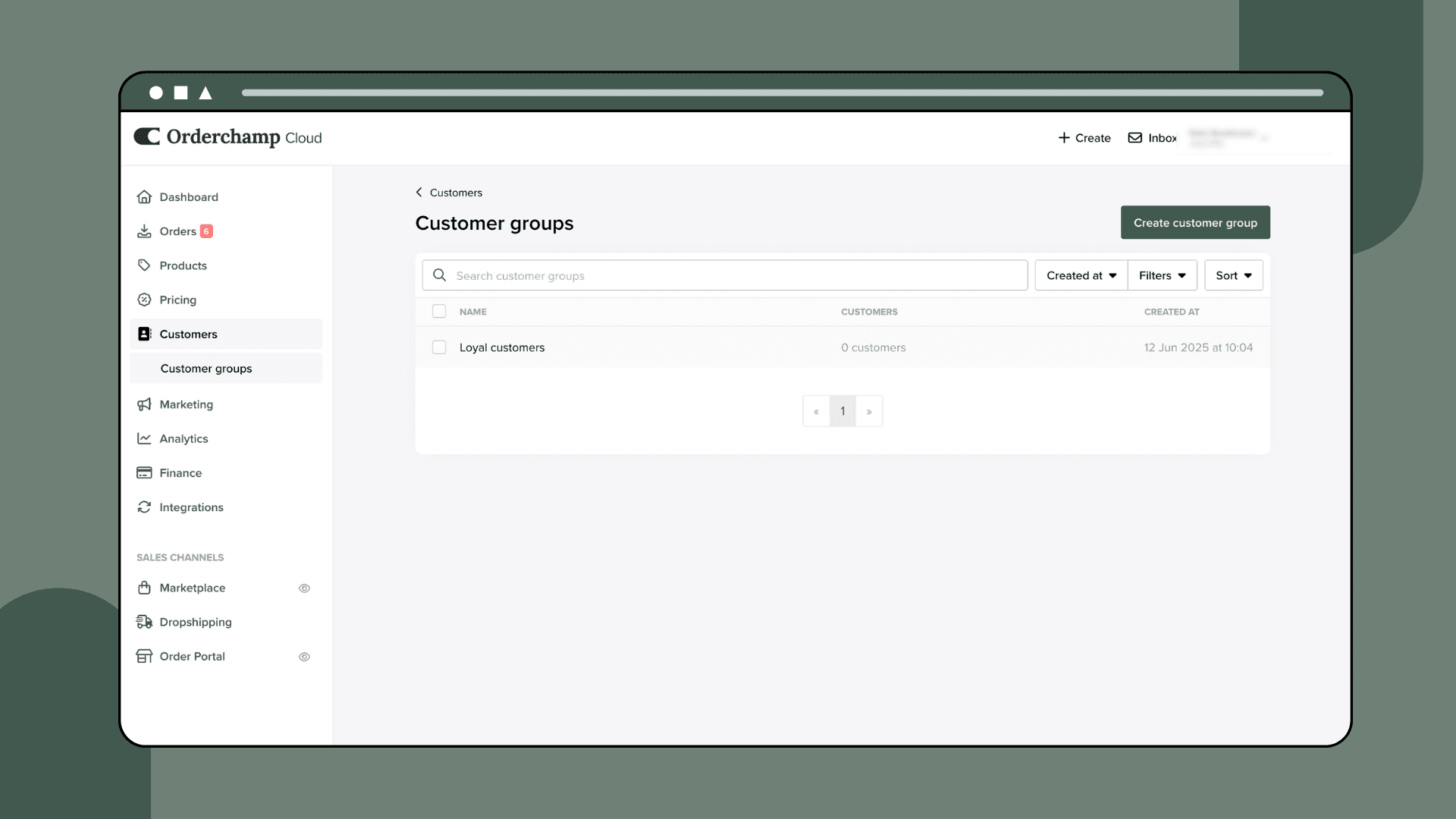
This is where tools like customer-specific catalogs come into play. Rather than maintaining multiple storefronts or duplicating product data, brands can use digital solutions to map product visibility to different customer groups, efficiently and at scale.
Orderchamp Cloud has this functionality built within its Cloud platform, without plugins or javascript workarounds. It allows brands to assign products to specific customer types, collections to certain regions, and mix-and-match visibility rules depending on strategy.
This enables:
Fewer support tickets
Better product-market fit
Cleaner, targeted campaigns
Scalable assortment strategies
And most importantly, it creates a more professional, relevant buying experience — something B2B buyers increasingly expect.
Final thoughts
The way we sell wholesale has changed, and so should the way we present products.
Moving from a one-size-fits-all catalog to a segmented, strategic assortment is no longer a luxury. It’s a necessity for brands that want to grow, simplify operations, and build stronger relationships with a diverse buyer base.
Whether you use dedicated tools or restructure your internal systems, the first step is acknowledging that not every buyer needs to see every product. And that’s not a limitation, it’s an opportunity.
Digitize wholesale with your turnkey B2B shop
Set up your own branded wholesale portal in no time. Automate ordering to reduce manual tasks and sell effortlessly to your business customers.
Éssayez Orderchamp Cloud


Découvrez si Orderchamp Cloud passe pour ton entreprise
Planifiez les prochaines étapes

Découvrez Orderchamp Sales App : transformez chaque moment de vente en commande
Annonces
Orderchamp
Lecture de 5 min

Comment conclure davantage de commandes de gros lors des visites commerciales
Stratégie de vente en gros
Orderchamp
5 min de lecture
L'essor du commerce de gros en libre-service : comment les détaillants préfèrent acheter aujourd'hui
Perspectives du secteur
Orderchamp
5 min de lecture