Published on
The benefits of a B2B Portal for wholesalers and brands
Contributors

Orderchamp
5 min read
In this article
In today’s B2B market, retailers and professional buyers expect an ordering experience that is as easy and intuitive as consumer online shopping.
Brands and wholesalers that still rely on email, Excel spreadsheets, or manual order entry not only lose efficiency, but also frustrate their customers and slow down their own growth. Retail buyers increasingly prefer to browse products, check prices, and place orders independently without needing to contact a sales representative.
This is why a B2B portal is becoming an essential tool for modern wholesale operations. By transforming traditional ordering processes into a digital, self-service experience, brands can simplify sales while giving customers the convenience they expect.
In this article, we explore what a B2B portal for wholesalers is, when it makes sense to implement one, and how it can improve efficiency, scalability, and customer experience.
What is a B2B Portal for wholesalers?
A B2B portal for wholesalers functions similarly to an online webshop but is designed specifically for business customers.
Within this branded online environment, retailers and professional buyers can log in to view products, check pricing, place orders, and review their order history. They can also manage invoices and account details without needing to contact a sales representative. In many ways, a B2B portal turns a traditional wholesale catalogue into a fully functional digital ordering platform.
For suppliers, this creates a more efficient sales process. Orders are captured directly through the portal, which reduces the risk of errors that often occur when orders are handled through email, spreadsheets, or manual entry.
For customers, the experience becomes significantly easier. Buyers can place orders whenever they want, explore product assortments at their own pace, and reorder products quickly. This improves customer satisfaction and often leads to stronger long-term relationships.
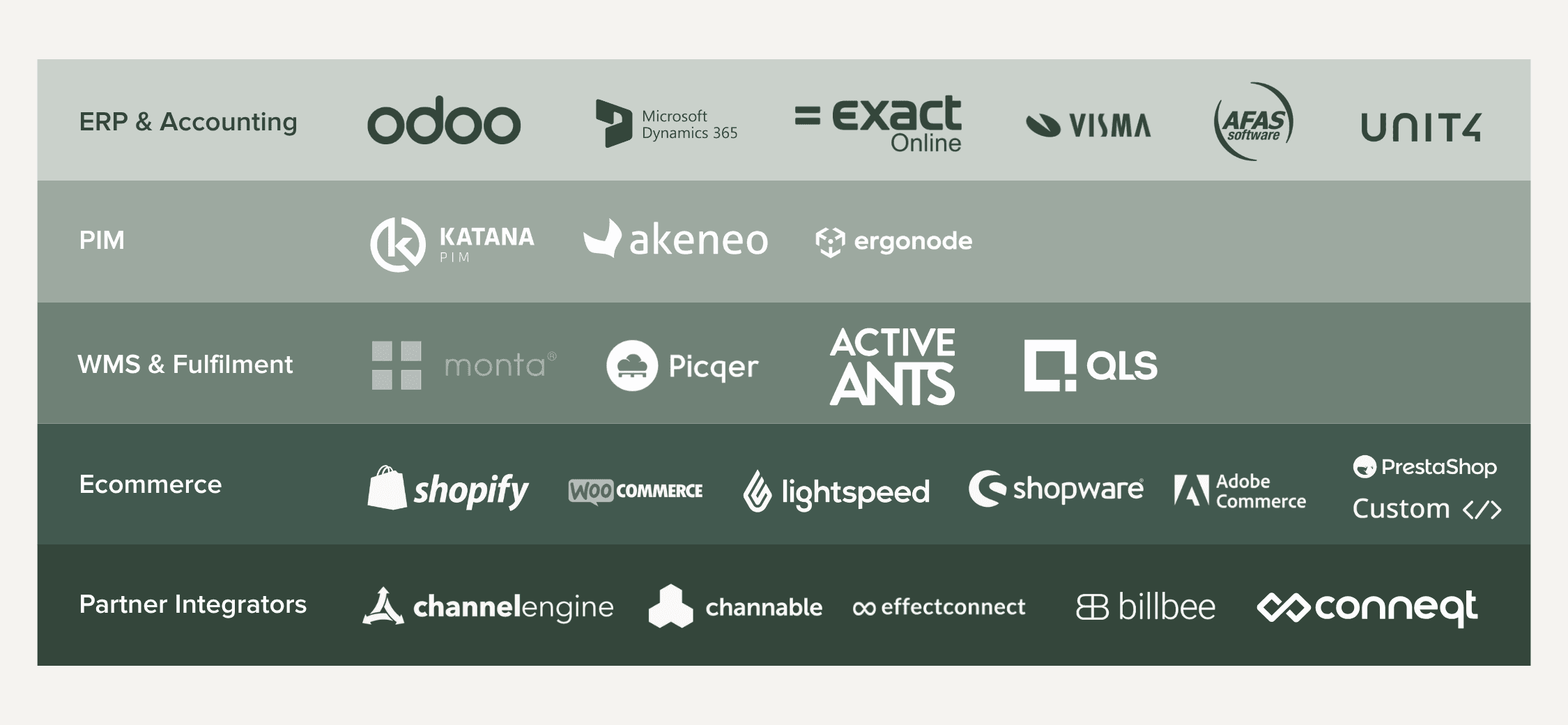
Many B2B portals also integrate with ERP systems, accounting software, and inventory management tools. Integrations with systems such as Exact or Oracle help ensure that orders, invoices, and stock information remain synchronized across systems, reducing administrative work and improving operational efficiency.
Who a B2B Portal is suitable for (and when it may not be)
A B2B portal is particularly valuable for brands and wholesalers that serve multiple business customers and process orders frequently.
Companies that benefit the most from a B2B portal typically include brands with large product assortments or complex pricing structures. When managing many SKUs and different price lists, a centralized ordering environment makes it easier for customers to browse products and place orders accurately.
It is also well suited for companies that want to save time for both their customers and their internal teams. By allowing buyers to place orders independently, sales teams can spend less time processing orders and more time building relationships and expanding sales.
Another common use case is for brands that currently rely heavily on distribution partners. A B2B portal allows these companies to digitize their wholesale operations and maintain stronger control over pricing, assortment, and customer relationships.
Brands that want to gain better insights into purchasing patterns also benefit from a portal. Digital ordering systems make it easier to analyze buying behavior, track popular products, and respond more effectively to demand.
However, a B2B portal may be less suitable for companies that work with only a few large clients who prefer highly personalized service and rarely place orders online. It may also be unnecessary for businesses that process very few orders or operate with extremely simple product catalogues.
Why more brands are switching to a self-service B2B Portal
Across industries, B2B commerce is becoming increasingly digital. Many suppliers now offer online ordering as part of their sales strategy.
According to research from McKinsey, around 71% of B2B sellers now offer some form of e-commerce, and online channels already account for a significant share of total revenue. As a result, digital ordering is quickly becoming a basic requirement to remain competitive.
However, the shift toward B2B portals is not only about generating more sales. Many brands adopt these systems because they improve efficiency, reduce manual work, and create a better experience for both customers and internal teams.
A B2B portal allows customers to log in, browse the product catalogue, and place orders within minutes. Features such as reorder functionality and customer-specific pricing make the process even faster.
Automation also reduces the risk of errors that often occur when orders are processed manually through emails or spreadsheets. By capturing orders directly through the portal, companies save time and ensure smoother order processing.
Another advantage is accessibility. Retail customers can place orders at any time of day instead of being limited to office hours. This flexibility makes the buying process more convenient for customers and helps suppliers capture orders more efficiently.
Pricing flexibility is another important benefit. Many wholesalers need to offer different prices depending on customer type, order size, or long-term partnerships. A B2B portal can automate these pricing structures, ensuring that each customer sees the correct prices without manual adjustments.
Shipping costs can also be customized. Delivery fees may vary depending on location or shipping conditions, and a digital portal makes it easier to apply predefined shipping rules or customer-specific delivery terms.
Finally, a digital ordering environment supports long-term scalability. Managing price lists and orders through spreadsheets may work for smaller operations, but as a company grows, manual processes become increasingly inefficient. Features such as selective customer access, payment terms, and volume discounts allow suppliers to scale their operations without increasing administrative workload.
Step-by-step guide to choosing a B2B Portal for wholesalers
Once a company decides to implement a B2B portal, the next challenge is choosing the right solution. Many software providers offer tools that perform similar functions, even if they use different terms such as order management systems, ordering portals, or B2B ecommerce platforms.
The right solution depends largely on the company’s specific needs and growth plans.
The first step is identifying the main challenges you want to solve. Many businesses implement a portal because manual order entry consumes too much time. Others want to introduce customer-specific pricing, improve product visibility, or provide real-time stock updates to customers.
It is also important to consider operational needs such as ERP integrations, inventory synchronization, and customer segmentation. Some brands may want to restrict access to certain collections or offer different assortments to different retailers.
When comparing software solutions, companies should also consider potential hidden costs. Pricing models vary significantly between providers, and some platforms charge per transaction, per user, or for additional modules.
It is also useful to evaluate whether the system can be maintained without specialized technical support. A solution that requires constant developer involvement may create unnecessary operational costs.
Another important factor is scalability. Businesses should consider how many customers they currently serve, how many products they offer, and whether they plan to expand internationally. Choosing a scalable system ensures that the platform will continue to support growth over time.
Ease of use is equally important. If customers find the ordering portal complicated or confusing, they are unlikely to adopt it. The interface should therefore be intuitive for both customers and internal teams, allowing users to manage products, customers, and orders without technical expertise.
Finally, companies should ensure that the portal integrates smoothly with their existing software. Integration with inventory systems, ERP platforms, CRM tools, and accounting software helps automate order processing and reduces manual work.
The Orderchamp B2B Portal
Many traditional B2B platforms were not designed with growing brands in mind. Some lack flexibility, require complex integrations, or charge additional fees for customization and extra modules. This can lead to inefficient processes and a poor ordering experience for customers.
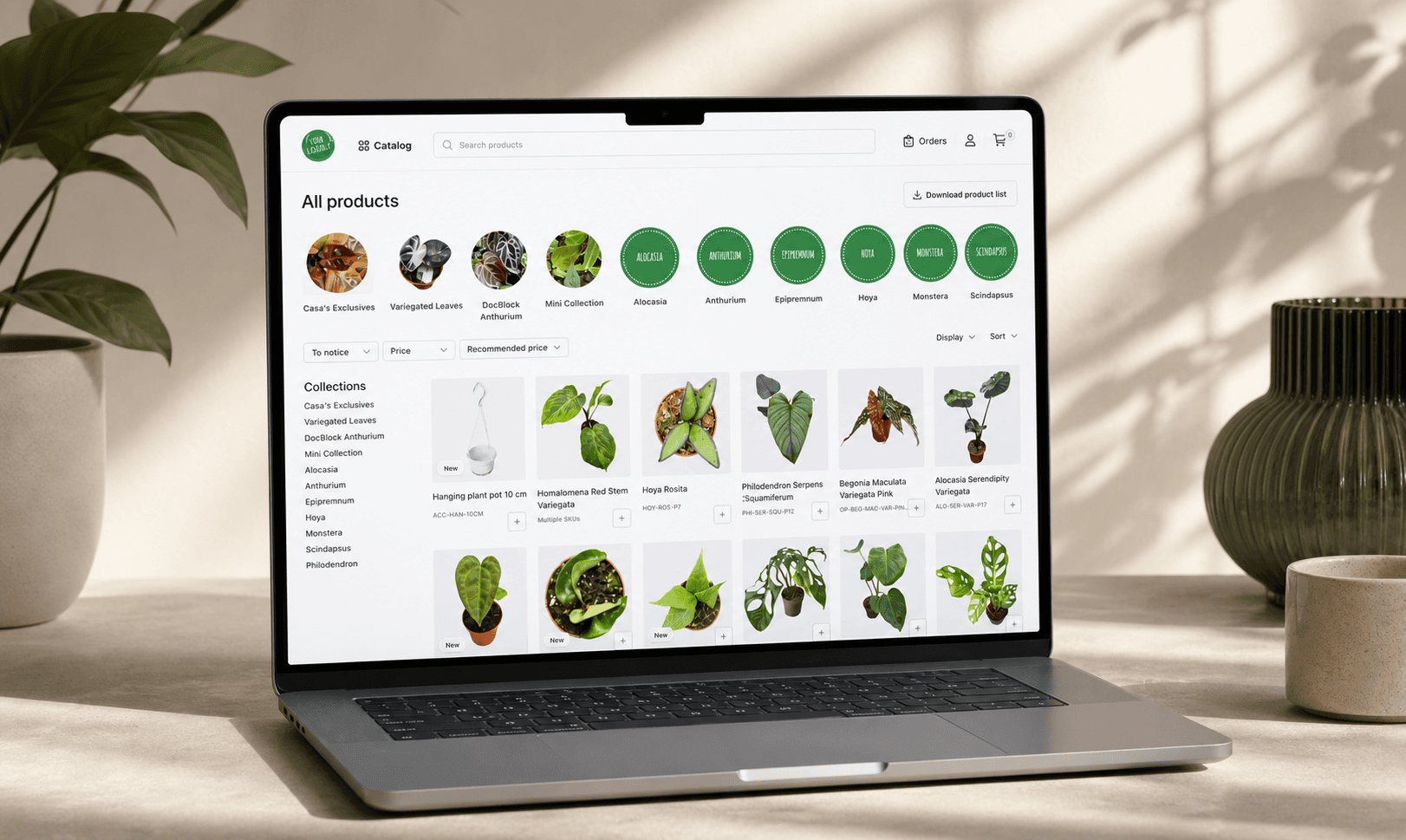
The Orderchamp B2B Portal offers a branded online ordering environment that allows brands to digitize their wholesale operations while maintaining control over their customer relationships.
With the portal, brands can create their own branded webshop for business buyers, automate order management, and streamline their wholesale sales processes.
Key features include customer account management, customer-specific pricing and assortments, and simple onboarding for new retailers. The portal also offers a user-friendly backoffice that allows teams to manage customers, products, and content without requiring technical skills.
In addition, the platform integrates with ERP systems, CRM software, and accounting tools, helping companies centralize their wholesale operations.
Unlike some platforms, Orderchamp does not charge commissions or setup fees, allowing brands to digitize their B2B sales without additional transaction costs.
The goal of the portal is to help brands simplify wholesale ordering, strengthen relationships with retail buyers, and improve operational efficiency.
Conclusion
Wholesale is becoming increasingly digital. Retail buyers now expect the same convenience and transparency in B2B purchasing that they experience when shopping online as consumers.
A B2B portal helps brands meet these expectations by providing a self-service ordering environment where customers can browse products, view pricing, and place orders independently.
For wholesalers, the benefits include reduced manual work, fewer ordering errors, improved operational efficiency, and stronger customer relationships.
Brands that continue to rely on email, spreadsheets, or manual order processing risk slowing down their growth and missing opportunities to scale their wholesale operations.
By implementing a B2B portal, suppliers can create a more efficient and professional buying experience while preparing their business for future growth.
Frequently asked questions about B2B Portals for wholesalers
How difficult is it to implement a B2B portal?

What does a B2B portal cost?
Is a B2B portal scalable?