Published on
How to create a high-converting B2B product catalog
Contributors

Orderchamp
5 min read

In this article
In B2B ecommerce, your product catalog is more than a collection of items. It is often the first place retailers go to decide whether your brand fits their store, their customers, their margins and their seasonal buying plans.
A strong digital catalog can help retailers understand your assortment faster, compare products more easily and place orders with more confidence. A weak catalog, on the other hand, can create friction before the conversation even starts. Missing product details, unclear images, outdated stock information or confusing variants can slow buyers down and make your products easier to skip.
Whether you are moving away from traditional PDFs or already selling through a B2B marketplace, optimizing your product catalog is one of the most practical ways to improve visibility, trust and conversion. Here are six ways to make your catalog work harder.
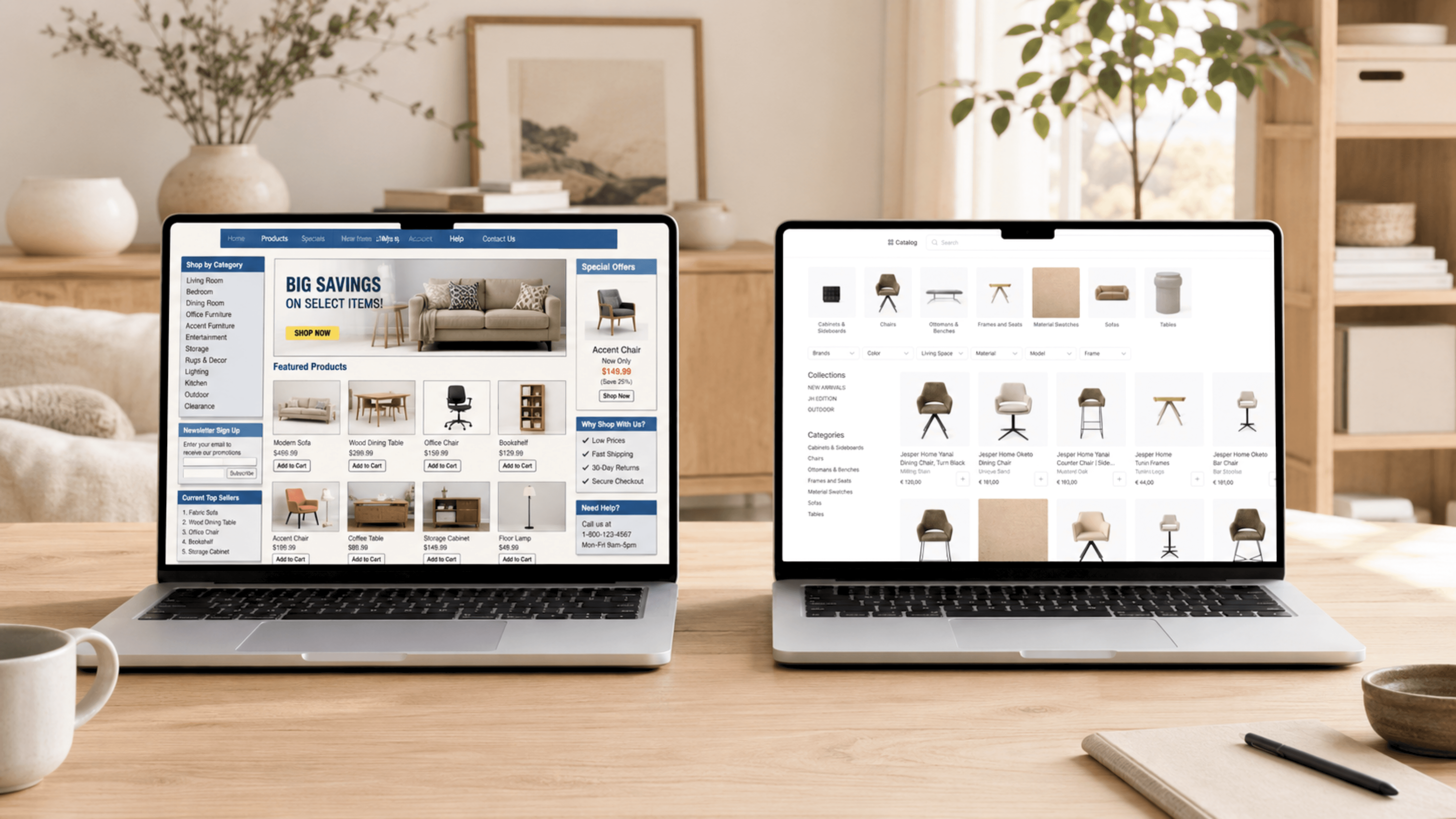
1. Start with product information buyers actually need
Retailers are not only looking at how your products look. They are also calculating whether those products make sense for their store.
That means your product pages should answer the practical questions a buyer would usually ask before placing an order. Think beyond the basic product name and description and make sure every product includes the details that matter most in B2B buying, such as:
Product name and short description
Materials, ingredients or composition
Dimensions, weight or size information
Available colors, sizes, scents or variants
Case quantities and pack sizes
Minimum order values or minimum order quantities
Recommended retail price
Delivery time and availability
Care instructions or usage notes
For B2B buyers, small details can make a big difference. A retailer buying homeware, for example, may need to know whether a vase is watertight, how large it looks on a shelf or how many pieces come in a case pack. A fashion retailer may want to understand the fit, size range, fabric composition and reorder availability. A gift shop may care about packaging, display potential and whether an item works well as a seasonal add-on.
The easier you make it for buyers to evaluate your products, the less they have to ask before ordering.
2. Use product photography that supports buying decisions
Good product photography does more than make your catalog look attractive. It helps retailers imagine how your products will look in their store, on their shelves or in their online assortment.
For a high-converting B2B catalog, try to combine different types of visuals:
Packshots to show the product clearly and consistently
Lifestyle images to communicate the feeling behind your brand
Detail shots to highlight materials, textures, finishes, packaging or craftsmanship
Scale references to make size easier to judge online
Collection images to show how products work together in a full assortment
Collection images can be especially powerful in B2B. Retailers often buy in themes, stories or displays rather than single products. Showing how items work together can encourage larger basket sizes and help buyers build a more complete assortment.
For example, instead of only showing individual summer tableware pieces, you could include a styled outdoor dining setup. Instead of photographing baby products separately, you could show a small giftable nursery collection. This helps retailers see the merchandising potential immediately.
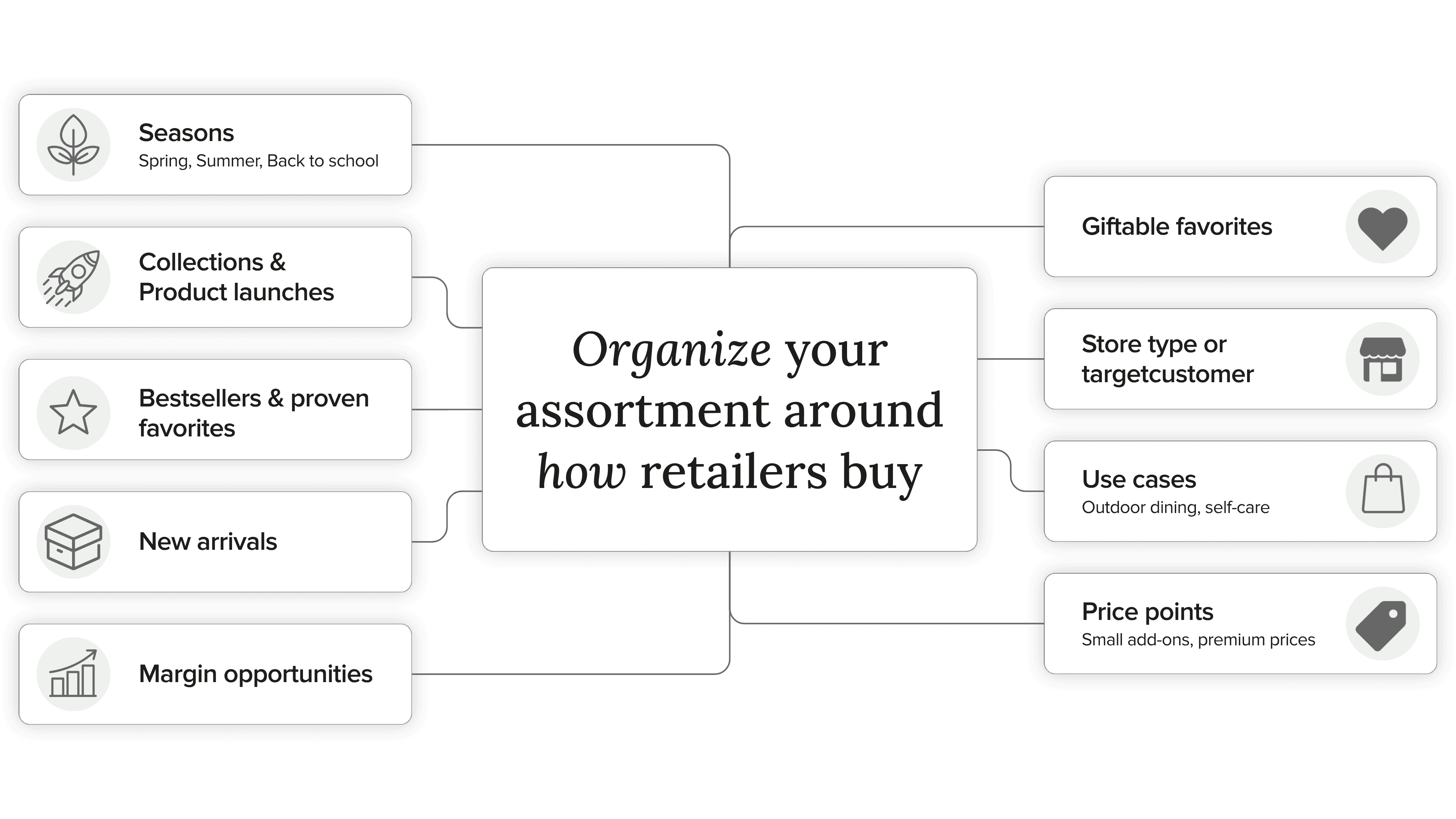
3. Organize your assortment around how retailers buy
A digital catalog should not feel like a long, unstructured product list. Retailers often browse with a specific buying mission in mind, so your assortment should be organized in a way that supports that journey.
Instead of only grouping products by internal categories, think about how a retailer would shop your range. You could structure your catalog around:
Seasons, such as spring, summer, back to school or Christmas
Collections or product launches
Bestsellers and proven favorites
New arrivals
Margin opportunities
Giftable products
Store type or target customer
Use cases, such as outdoor dining, self-care, gifting or travel
Price points, such as small add-ons or premium pieces
For example, a concept store may be looking for “summer gifting,” “small add-ons at checkout” or “products under €20.” A children’s store may want to browse by age group, occasion or new baby gifts. A fashion retailer may look for capsule collections, color stories or products that can be reordered throughout the season.
Clear catalog structure makes discovery easier. It also helps buyers understand the logic behind your assortment, which can make your brand feel more professional and easier to buy from.
4. Make reordering as easy as the first order
A high-converting catalog should not only help new buyers discover your products. It should also make it easy for existing customers to reorder their favorites.
Retailers are busy, and many do not want to search through an entire assortment just to find the products they already know and trust. To reduce friction, make sure your catalog includes:
Clear and consistent product names
Visible variants for colors, sizes, scents or styles
Bestseller labels or collection highlights
Up-to-date stock visibility
Clear information on reorder availability
Logical product grouping for repeat-purchase categories
Reordering is especially important in categories such as beauty, food, stationery, socks, candles, baby products and other repeat-purchase assortments. The easier it is for retailers to restock, the more likely they are to come back before they run out.
5. Add context that helps retailers sell the product
Retailers do not just buy products. They buy products they believe they can sell.
That is why your catalog should include useful context that supports the buying decision. This can be simple, practical information that helps a retailer understand how to position the product in their own store.
Useful context could include:
Merchandising tips
Product combinations or bundle ideas
Sustainability claims or certifications
Care instructions
Giftability cues
Seasonal relevance
“Perfect for” use cases
Display suggestions
Recommended complementary products
For example, a candle supplier could mention which scents work well for gifting, which products pair nicely in a display and which collections are strongest for autumn or Christmas. A kitchen brand could suggest product bundles for outdoor dining, housewarming gifts or host gifts. A beauty brand could highlight travel-friendly formats, refill options or ingredients that are popular with conscious consumers.
This type of information helps retailers picture how the product fits into their store. It also gives them language they can reuse in their own customer communication, whether that is on shelf labels, in newsletters or on social media.
6. Keep your catalog updated and easy to trust
Even the best-looking catalog can lose impact if the information is outdated.
Out-of-stock products, missing images, unclear prices or old seasonal collections can create doubt. Retailers may wonder whether the assortment is still active, whether delivery information is accurate or whether they need to contact you before placing an order. Every extra step can slow down the buying process.
Make it a habit to review your catalog regularly and check whether:
Discontinued products are removed or hidden
Seasonal collections are updated on time
Product images still match the current item
Pricing is correct
Stock information is accurate
Delivery details are up to date
New products are easy to find
Bestsellers are clearly highlighted
This is especially important during peak buying periods. Retailers often plan ahead for seasons such as summer, back to school, autumn, Christmas and spring gifting. If your catalog is clear, current and easy to browse during these moments, you increase the chances of being included in their buying plans.
A quick note on discoverability in 2026
Digital product catalogs are also becoming more important as product discovery changes. Retailers are increasingly using search tools, AI assistants and marketplace filters to find relevant products faster. This means your catalog needs to be clear not only for human buyers, but also for the systems helping them search.
Strong product titles, specific descriptions, clear categories, complete product attributes and helpful FAQ-style information can all support discoverability. Instead of writing vague descriptions like “beautiful handmade item,” use specific language that explains what the product is, who it is for, what it is made from and when it is most relevant.
For example, “ceramic serving bowl for outdoor summer dining” is much more useful than “stylish bowl.” It gives buyers and search systems more context, while also making the product easier to understand at a glance.
A few simple ways to improve discoverability include:
Use specific product titles instead of overly creative names
Add important attributes such as material, size, color and use case
Mention relevant seasons, occasions or store types
Keep category names clear and logical
Answer common buyer questions directly in your product descriptions
Avoid vague wording that does not explain what the product actually is
This does not mean your catalog needs to become overly technical. It simply means that clarity matters. The more structured and specific your product information is, the easier it becomes for retailers to find, evaluate and buy your products.
Turn your catalog into a sales tool
A high-converting B2B product catalog should do more than display your assortment. It should guide retailers through the buying process, answer their most important questions and make ordering feel easy.
By improving your product information, photography, catalog structure and discoverability, you create a smoother experience for buyers and a stronger foundation for online sales.
Whether retailers are discovering your brand for the first time or returning to reorder their bestsellers, your catalog plays a key role in helping them make confident buying decisions. And on a B2B marketplace, that confidence can make all the difference between browsing and placing an order.
Frequently asked questions
Which product details matter most to retailers?

How should we organize a large assortment?
How do we balance storytelling and product information?
How often should catalog information be updated?
How can we measure catalog performance?



EUDR 2026: What brands and suppliers actually need to do before 30 December
Industry insights

Orderchamp
5 min read

What to do when the trade show is over: 7 ways to turn leads into wholesale orders
B2B ecommerce
Orderchamp
5 min read

Get ready for the Orderchamp Digital Fair
Product & features
Orderchamp
5 min read