Published on
The role of digital transformation in wholesale: why B2B ecommerce is essential
Contributors

Orderchamp
2 min read

In this article
Digital transformation is redefining how wholesale businesses operate, making B2B ecommerce a critical driver of efficiency, scalability and long-term growth. As technology continues to reshape industries, relying on manual processes is no longer sustainable for suppliers that want to stay competitive.
In today’s wholesale environment, businesses face increasing pressure to process orders faster, manage more complex assortments and meet higher expectations from retail buyers. This shift is pushing more suppliers toward digital B2B ecommerce platforms that simplify operations while improving the overall buying experience.
Adopting B2B ecommerce is no longer about innovation alone. It is about building a foundation that allows wholesale businesses to grow without increasing operational complexity.
What is B2B ecommerce?
B2B ecommerce refers to the process of buying and selling products between businesses through digital platforms instead of traditional communication methods such as phone or email.
In a wholesale context, this means that suppliers can offer retailers a structured and centralized environment where they can browse products, access pricing and place orders independently. This approach reduces manual work, improves accuracy and allows suppliers to serve more customers without increasing internal workload.
Modern B2B ecommerce platforms go beyond simple ordering systems. They enable advanced features such as customer-specific catalogs, automated workflows and integration with existing business systems, creating a seamless and scalable sales process.
Traditional ordering vs. digital wholesale
The traditional wholesale model relies heavily on manual processes. Orders are often placed through email exchanges, phone calls or shared documents, which introduces delays and increases the risk of errors.
Digital wholesale replaces these fragmented workflows with a connected system where ordering, inventory and communication are centralized. Instead of waiting for confirmations or manually checking stock, retailers can access real-time product information and place orders instantly.
This shift significantly improves operational efficiency. Automated order processing reduces human error, while real-time inventory visibility ensures that buyers always have accurate information. The ability to offer a self-service ordering experience also allows retailers to place orders at any time, creating a more flexible and convenient buying process.

Benefits of B2B ecommerce platforms
Switching to a B2B ecommerce platform creates measurable advantages across every part of the wholesale operation.
Efficiency improves as manual tasks are replaced with automated workflows, allowing teams to focus on growth instead of administration. Inventory management becomes more reliable when systems are connected, ensuring that stock levels are always up to date and reducing the risk of overselling.
Customization features play a central role in modern wholesale. Suppliers can define customer-specific pricing, tailor promotions and apply advanced shipping rules based on order value, number of units, product weight or minimum order quantities. This level of control ensures that both commercial and logistical processes align with business strategy.
At the same time, the buyer experience improves significantly. Retailers can explore products, manage orders and reorder items independently through a self-service environment, which increases satisfaction and encourages repeat business.
B2B ecommerce trends for 2025
Wholesale businesses that want to stay competitive need to understand the trends shaping B2B ecommerce.
Mobile commerce continues to grow as more buyers place orders from different devices throughout the day. Platforms that offer a seamless mobile experience are becoming essential for capturing demand in real time.
Personalization is advancing through data and automation. Suppliers are increasingly using digital tools to tailor product recommendations, pricing and assortments to individual customers, creating a more relevant buying experience.
Marketplace-driven discovery is also expanding. Retailers are actively searching for new brands through digital platforms, making visibility and presentation more important than ever. High-quality product imagery and structured catalogs play a key role in this.
Sustainability is becoming a decision factor as well, with more businesses prioritizing suppliers that align with responsible sourcing and production practices.
Overcoming wholesale challenges with digital transformation
Wholesale businesses often struggle with managing increasing complexity. As assortments grow and customer expectations rise, manual processes become harder to maintain.
Digital transformation addresses these challenges by centralizing operations and introducing automation. Order management becomes more structured, inventory tracking becomes more accurate and communication becomes more efficient.
Suppliers also gain access to valuable data insights. Understanding which products perform best, how customers reorder and which markets show the most potential allows businesses to make more informed decisions.
Automation tools are playing a growing role in this process. Many brands are already optimizing their product data and workflows using AI-driven approaches.
How to start your own B2B ecommerce platform
Transitioning to digital wholesale requires a clear strategy and the right technology.
Selecting the right platform is the first step. A solution designed specifically for wholesale suppliers will offer the flexibility needed to manage complex pricing, customer groups and product visibility.
Integration is equally important. Connecting your ecommerce platform with your ERP system ensures that orders, inventory and customer data remain synchronized, reducing manual work and improving accuracy.
Customization features should be implemented early. Setting up pricing rules, customer-specific catalogs and shipping logic allows suppliers to create a tailored experience from the start.
User experience plays a critical role in adoption. A clear structure, intuitive navigation and mobile responsiveness make it easier for retailers to engage with the platform and place orders consistently.
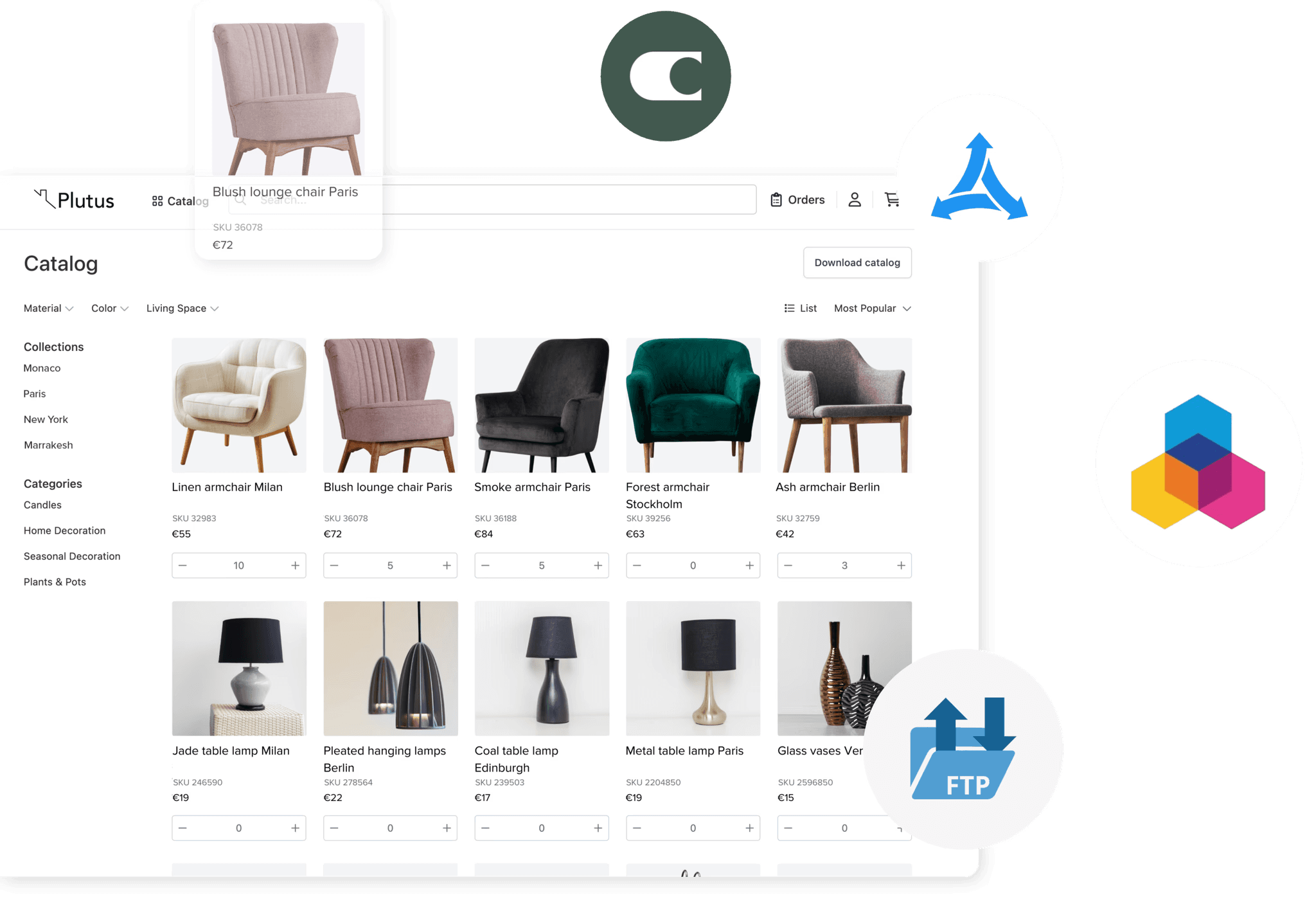
Benefits of offering a self-service B2B portal
A self-service B2B portal is one of the most impactful tools for modern wholesale businesses.
Retailers expect instant access to products, pricing and availability. A digital portal allows them to browse and order independently, without relying on manual communication. This creates a faster and more efficient buying experience.
Order management becomes more transparent as buyers can track shipments, view invoices and manage their accounts in one place. This reduces the need for support and improves overall satisfaction.
For suppliers, the impact is equally significant. Operational costs decrease as manual tasks are reduced, and the business becomes more scalable without requiring additional resources.
With the Orderchamp Cloud B2B Portal, suppliers can also control which collections are shown to which retailers, enabling a more targeted and relevant assortment strategy.
Grow your wholesale business with Orderchamp
Orderchamp provides wholesale suppliers with a digital ecosystem designed to simplify and scale B2B sales.
The Orderchamp Cloud B2B Portal allows brands to create a fully branded wholesale environment where retailers can place orders, access personalized pricing and explore curated product collections.
At the same time, in-person sales remain an important part of wholesale. With tools like the Orderchamp Sales App, suppliers can capture orders instantly during showroom visits, trade shows or sales meetings, ensuring that offline interactions are seamlessly connected to digital workflows.
By combining a self-service B2B portal with mobile sales tools, suppliers can create a consistent and efficient buying experience across every channel.
Power your B2B sales with a B2B Portal
Take control of your wholesale operations with the Orderchamp Cloud B2B Portal. Build a branded B2B environment, automate your order flow and create a seamless buying experience that supports both digital growth and in-person sales.



EUDR 2026: What brands and suppliers actually need to do before 30 December
Industry insights

Orderchamp
5 min read

What to do when the trade show is over: 7 ways to turn leads into wholesale orders
B2B ecommerce
Orderchamp
5 min read

Get ready for the Orderchamp Digital Fair
Product & features
Orderchamp
5 min read