Published on
What really makes retailers buy from wholesale suppliers
Contributors

Orderchamp
7 min read

In this article
Many wholesale suppliers focus heavily on their products, assuming that if an item is attractive enough, retailers will naturally place orders. In reality, retail buyers evaluate suppliers based on far more than just the product itself.
Retailers operate under pressure. They need to select products that will sell quickly, maintain healthy margins, and fit their store concept. At the same time, they often work with dozens of suppliers and have limited time to evaluate each brand. This means the buying decision is rarely impulsive. Retail buyers are constantly balancing risk, efficiency, and opportunity.
Understanding retail buyer behavior in wholesale is therefore essential for brands that want to grow their B2B sales. The suppliers that consistently attract retailers tend to share several common characteristics: clear positioning, a simple buying experience, transparent pricing, and a strong brand presentation.
In this article, we explore what really influences retail purchasing decisions in wholesale and how suppliers can adapt their wholesale strategy to increase orders.
How retail buyers actually make purchasing decisions
Retail buying decisions follow a strategic process. Buyers do not simply browse catalogs looking for interesting products. Instead, they evaluate whether a product fits their assortment, whether it aligns with their store identity, and whether working with the supplier will be efficient.
Most retailers subconsciously evaluate suppliers using three simple questions:
Will this product sell in my store?
Is this supplier easy to work with?
Will the margins make sense?
If any of these questions remain unclear, buyers often postpone the purchase or choose another supplier. Retail buyers are constantly optimizing their retail assortment strategy, looking for products that align with their store concept while minimizing risk. Because shelf space and purchasing budgets are limited, each supplier must clearly demonstrate value.
This is why wholesale suppliers increasingly invest in structured digital ordering systems and online catalogs. Digital tools make it easier for retailers to explore products, evaluate pricing, and place orders without unnecessary friction. Many suppliers are therefore turning to solutions like a B2B portal, which centralizes product catalogs, ordering processes, and pricing visibility in one place. If you want to understand why these portals are becoming standard in wholesale, see our article that explains the benefits of a B2B portal for wholesalers and brands.
Store–product alignment
Retailers rarely purchase products that feel generic or difficult to position. Every product in a store contributes to the store’s identity, and buyers carefully curate assortments that match their brand.
This means retailers are not only buying products; they are buying concepts. When suppliers clearly communicate their brand identity, it becomes easier for retailers to understand where the product fits within their assortment. A supplier that presents a cohesive style or product theme, as shown below, makes the buyer’s decision significantly easier.

Retail buyers often think in terms of collections or lifestyle categories. A concept-driven assortment allows them to quickly visualize how the product will fit into their store layout, merchandising displays, and seasonal retail planning.
For example, a home decor retailer might specifically look for Scandinavian-inspired interior products, while a lifestyle boutique might focus on sustainable or handcrafted items. When a supplier’s catalog clearly reflects this positioning, retailers can immediately recognize whether the products align with their store.
Suppliers who organize their product catalog into structured collections, themes, or categories often see higher conversion rates because buyers can instantly understand the product context.
Supplier reliability
Operational simplicity is one of the biggest drivers of wholesale purchasing decisions, yet many suppliers underestimate its importance.
Retail buyers often manage dozens of suppliers simultaneously. If ordering from one brand requires sending emails, downloading spreadsheets, or requesting price lists manually, the process becomes inefficient. Retail buyers increasingly expect the same efficiency in B2B purchasing that they experience in consumer ecommerce. When ordering is complicated, buyers simply move on to suppliers who offer a faster experience.
In contrast, suppliers that offer a streamlined digital ordering experience remove a major barrier for retailers. When a retailer can browse products, view pricing, and place orders within minutes, the likelihood of a purchase increases dramatically. Convenience becomes a competitive advantage in modern wholesale commerce.
This shift toward digital ordering is happening across the wholesale industry. Many brands are replacing email-based order management with automated systems that allow retailers to place orders independently. As explained in How manual B2B orders are stalling your wholesale growth (and how to automate them), manual B2B order processes often slow down growth and create unnecessary friction for both retailers and suppliers.
Professional presentation builds retailer trust
Retailers take financial risks with every order they place. Unlike consumers, they purchase inventory upfront and only generate revenue if the product sells. Because of this, retailers evaluate suppliers carefully before placing an order.
Professional presentation plays a major role in building this trust. Retail buyers pay attention to product photography, catalog clarity, brand storytelling, and the overall professionalism of a supplier’s online presence. A well-structured digital presence signals reliability and stability, while strong branding helps retailers understand the identity and positioning of the supplier.
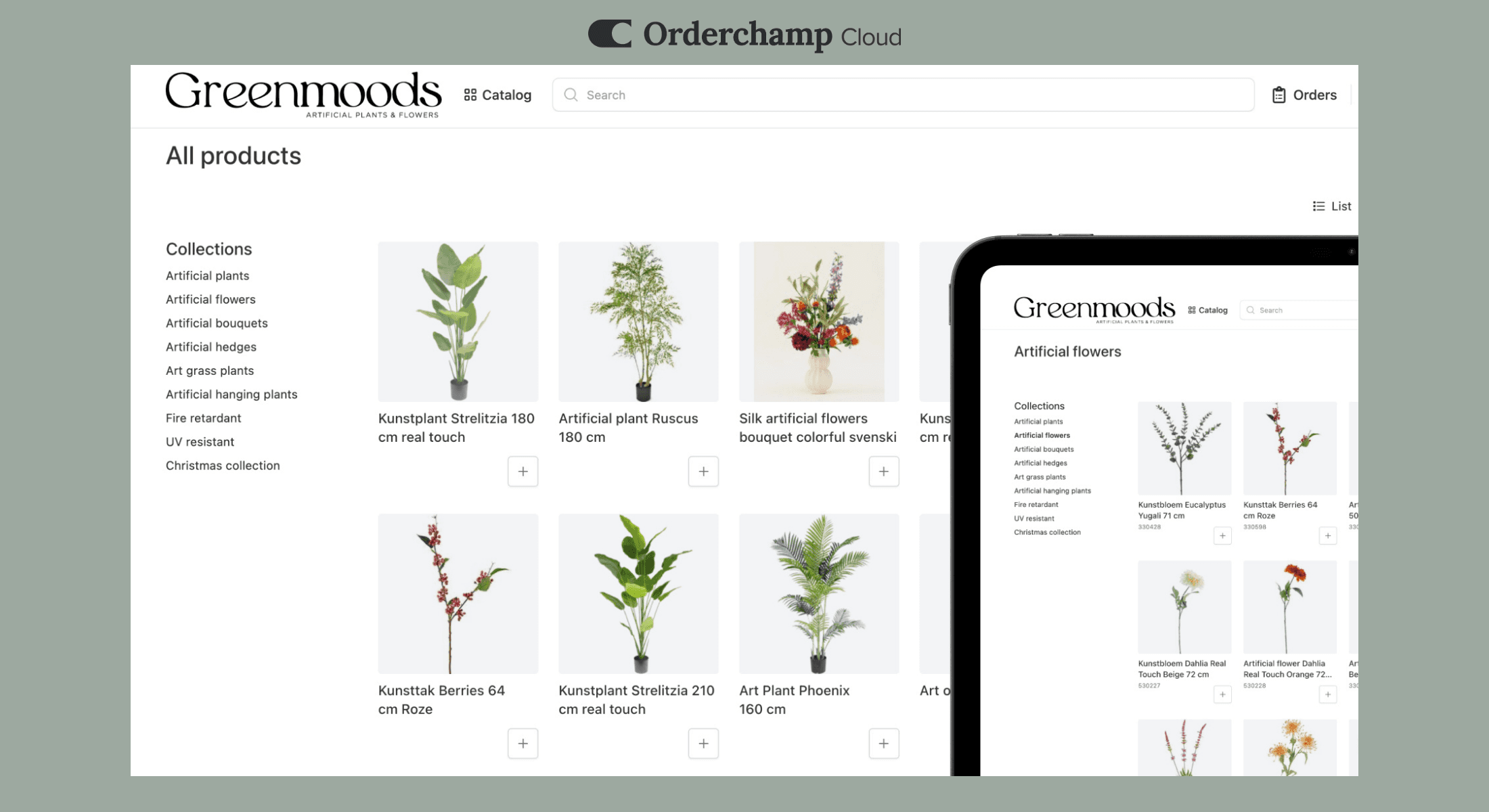
If a brand looks incomplete or disorganized, buyers may hesitate because it signals potential operational issues. A structured digital catalog or B2B portal can significantly improve this perception. When retailers can easily explore products and understand the brand story, they gain confidence in the supplier.
Strong branding and clear product presentation reduce uncertainty and make buyers more comfortable committing to an order.
Pricing transparency wins
Retailers constantly evaluate whether products will be profitable in their stores. To make this decision quickly, they need immediate access to clear pricing information.
Retail buyers often calculate margins within seconds while browsing catalogs. If wholesale prices, minimum order quantities, or recommended retail prices are unclear, the buying process slows down and decision-making becomes more difficult.
Retail buyers prefer transparency. When pricing is clearly visible, they can quickly calculate potential margins and decide whether a product is worth stocking. Suppliers who present pricing transparently often experience faster purchasing decisions and fewer abandoned opportunities.
Modern B2B ecommerce systems allow suppliers to display pricing structures, retailer-specific price lists, and volume discounts directly within their catalog. This removes unnecessary communication steps and allows retailers to make purchasing decisions independently.
Curated catalogs for faster retailer ordering
Retail buyers are constantly exposed to large product catalogs. While variety can be attractive, too many options can slow down decision-making.
Retailers appreciate suppliers who structure their assortments in a way that simplifies product discovery. Instead of presenting hundreds of unrelated items, successful suppliers organize their catalogs around collections or themes.
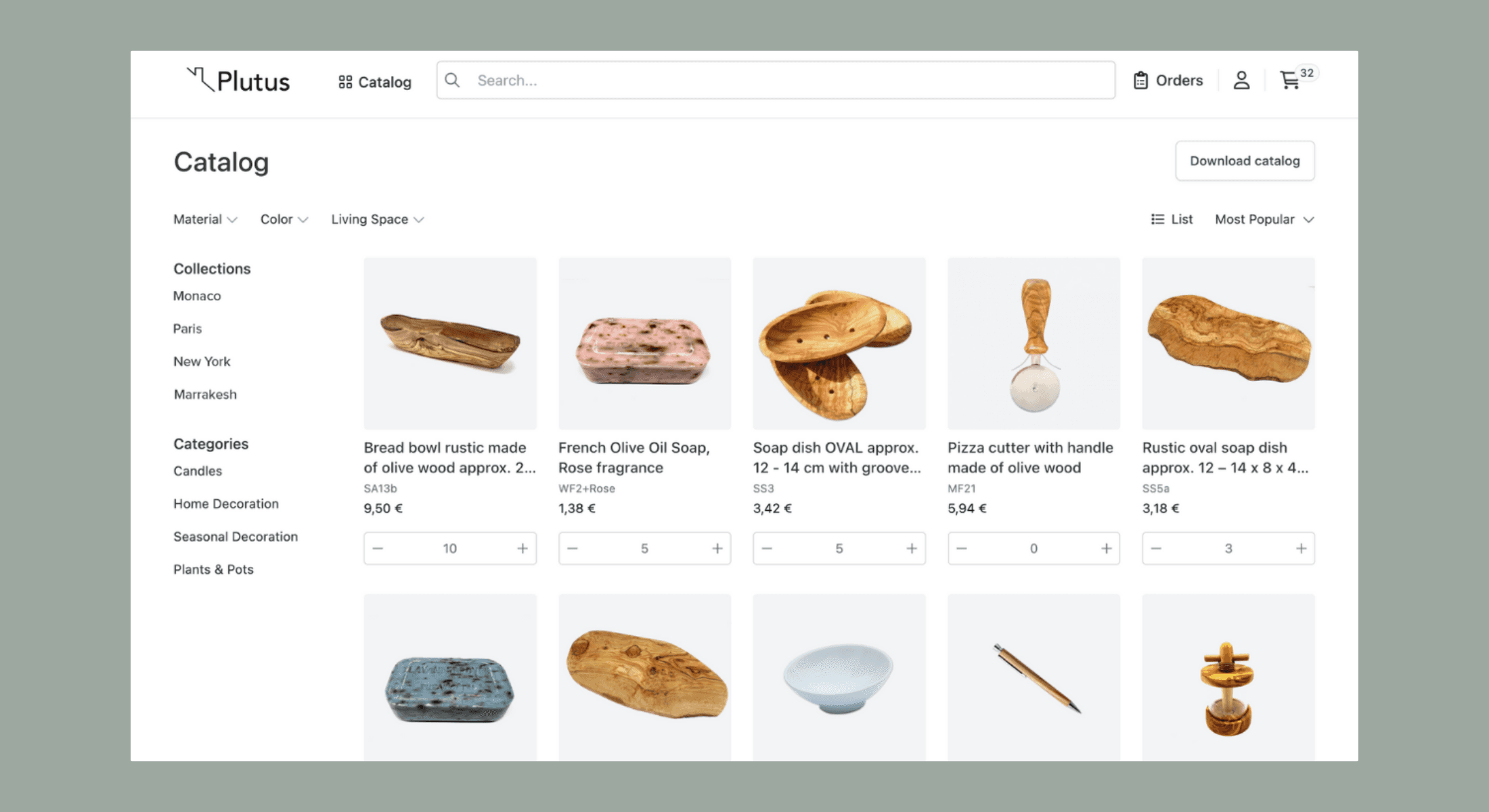
Seasonal assortments, bestsellers, and curated product bundles help buyers quickly understand which products are most relevant. Retail buyers often look for inspiration and guidance when browsing wholesale catalogs, and highlighting trending or popular products can significantly speed up purchasing decisions.
When retailers can immediately identify top-performing products or new arrivals, they can make purchasing decisions more confidently. This approach reduces decision fatigue and often leads to larger orders.
Reordering should be simple
The most successful wholesale relationships are built on repeat orders rather than one-time purchases.
Retailers return to suppliers when reordering products is simple and efficient. If restocking a bestseller requires browsing the entire catalog again or contacting the supplier manually, the process becomes frustrating.
Retail buyers value efficiency when managing inventory. The easier it is to reorder products that already perform well, the more likely retailers are to maintain long-term supplier relationships.
Digital ordering environments solve this problem by allowing retailers to quickly access their previous orders, reorder items, and check product availability. This convenience strengthens long-term supplier relationships and increases customer lifetime value.
Suppliers who focus on making reordering effortless often experience higher repeat order rates and more stable revenue streams.
Retailers value data and insights
For suppliers that want to build a more scalable wholesale infrastructure, setting up a structured B2B ecommerce platform is often the next step. This guide explains and outlines how brands can transition from manual wholesale processes to a fully digital ordering environment.
The shift toward digital wholesale buying
Retail buying behavior is evolving rapidly. While traditional sales channels like trade shows and sales agents remain important, retailers increasingly expect digital buying experiences.
Online catalogs and B2B ordering portals allow retailers to explore products and place orders whenever it suits them. This flexibility aligns better with the busy schedules of retail buyers and allows suppliers to reach retailers beyond traditional sales channels.
Digital wholesale platforms also allow retailers to compare suppliers, review product assortments, and analyze margins much faster than traditional ordering processes. Suppliers who invest in digital wholesale infrastructure gain a significant advantage because they reduce friction throughout the purchasing process.
As wholesale becomes increasingly digital, suppliers who offer structured ordering systems, professional product catalogs, and easy reordering tools will be best positioned to attract and retain retail buyers.
Conclusion
Retailers do not buy from suppliers simply because a product exists. They buy from suppliers who make the purchasing process clear, trustworthy, and efficient.
Brands that successfully attract retail buyers typically focus on strong product positioning, transparent pricing, professional brand presentation, and a frictionless ordering experience. As wholesale continues to digitize, suppliers who invest in modern B2B sales tools and structured catalogs will be better positioned to convert retailer interest into long-term partnerships.
Understanding what truly motivates retail buyers is the first step toward building a wholesale strategy that consistently generates orders.
Start your own B2B Portal with Orderchamp and give retailers a seamless way to discover your products and place wholesale orders.
Why do retailers choose certain wholesale suppliers?

What makes retailers place repeat wholesale orders?
Do retailers prefer ordering products online?
How can suppliers increase wholesale conversions?
What role does a B2B portal play in wholesale sales?



Upcoming wholesale trade shows in the Netherlands: the brand's guide to what's coming up near you
Guides
Orderchamp
5 min read

B2B Next Summer Edition: familiar stories, new perspectives
Industry insights
Orderchamp
5 min read

Wholesale order automation: a simple step-by-step guide
B2B ecommerce
Orderchamp
5 min read