Learn what a B2B tech stack is and why it is important to choose the correct one for B2B brands to make sure they can scale efficiently, automate operations, and deliver a seamless buying experience across all sales channels.
In this article
Why your B2B tech stack matters more than ever
In today's digital-first wholesale landscape, success is no longer driven by product alone. Efficiency, automation, and seamless buyer experiences have become critical differentiators. For brands managing complex assortments, multiple sales channels, and international growth, the structure of their B2B tech stack directly impacts performance. A fragmented setup leads to operational inefficiencies, while a well-integrated system enables scalability, accuracy, and stronger customer relationships.
What is a B2B tech stack?
A B2B tech stack is the full ecosystem of software solutions, platforms, and integrations a wholesale business uses to manage its operations, sales processes, and customer interactions. It connects systems such as inventory management, order processing, ecommerce, and customer data into one cohesive infrastructure. Rather than operating as separate tools, these systems communicate through APIs and integrations, creating a streamlined flow of data across the business.
The core layers of a modern B2B tech stack
At the foundation of every B2B tech stack sits the ERP system, the central source of truth for operational data. It manages inventory levels, pricing structures, financials, and order data. Because every other system depends on accurate, up-to-date information, the ERP is critical to consistency across the entire stack.
Ecommerce and ordering layer
This is where buyers interact directly with your brand. It includes B2B webshops, ordering portals, and digital catalogs that let retailers browse products, view tailored pricing, and place orders independently. A strong ecommerce layer improves conversion rates and significantly enhances the buyer experience.
As this layer matures, brands increasingly want to tailor the experience to specific customers, where personalization and tracking play a key role in optimizing performance.
Integration and API layer
The integration layer connects all systems in the stack through APIs or middleware. It ensures data flows in real time between platforms, eliminating manual input and reducing errors. Without a strong integration layer, businesses struggle with disconnected systems and inconsistent data.
CRM and customer management
CRM systems manage relationships with retailers and track sales activity. They give visibility into customer behavior, order history, and communication, helping sales teams build stronger, more personalized relationships. This layer is especially important in B2B, where long-term partnerships are key.
Marketing and growth tools
Marketing tools support demand generation and performance tracking across channels — email campaigns, paid advertising, and customer-data analysis to optimize growth. Integrated properly, they provide insights that feed back into sales and product decisions.
How to choose the right B2B tech stack
Choosing the right B2B tech stack means balancing operational needs with long-term scalability. The starting point is always your existing infrastructure — particularly the ERP or inventory system — since it forms the backbone of the entire setup. From there, evaluate how easily new tools integrate with existing systems, because strong API connectivity is what enables automation and efficiency.
Scalability should be a key consideration. As brands expand into new channels such as marketplaces and dropshipping, the stack must support increased complexity without creating bottlenecks. Just as important is the buyer experience: modern B2B customers expect intuitive, self-service environments like B2C ecommerce. Solutions offering personalized catalogs, real-time stock visibility, and seamless ordering directly impact conversion and satisfaction.
Automation is another factor. Reducing manual processes such as order entry, invoicing, and data synchronization saves time and minimizes errors — the same principle behind a smoother way to manage wholesale orders. The goal is a system where data flows automatically between platforms, freeing teams to focus on growth rather than admin.
As more brands evaluate their infrastructure, many are comparing solutions to find the best fit for their growth stage and industry.
Where Orderchamp Cloud fits within a B2B tech stack
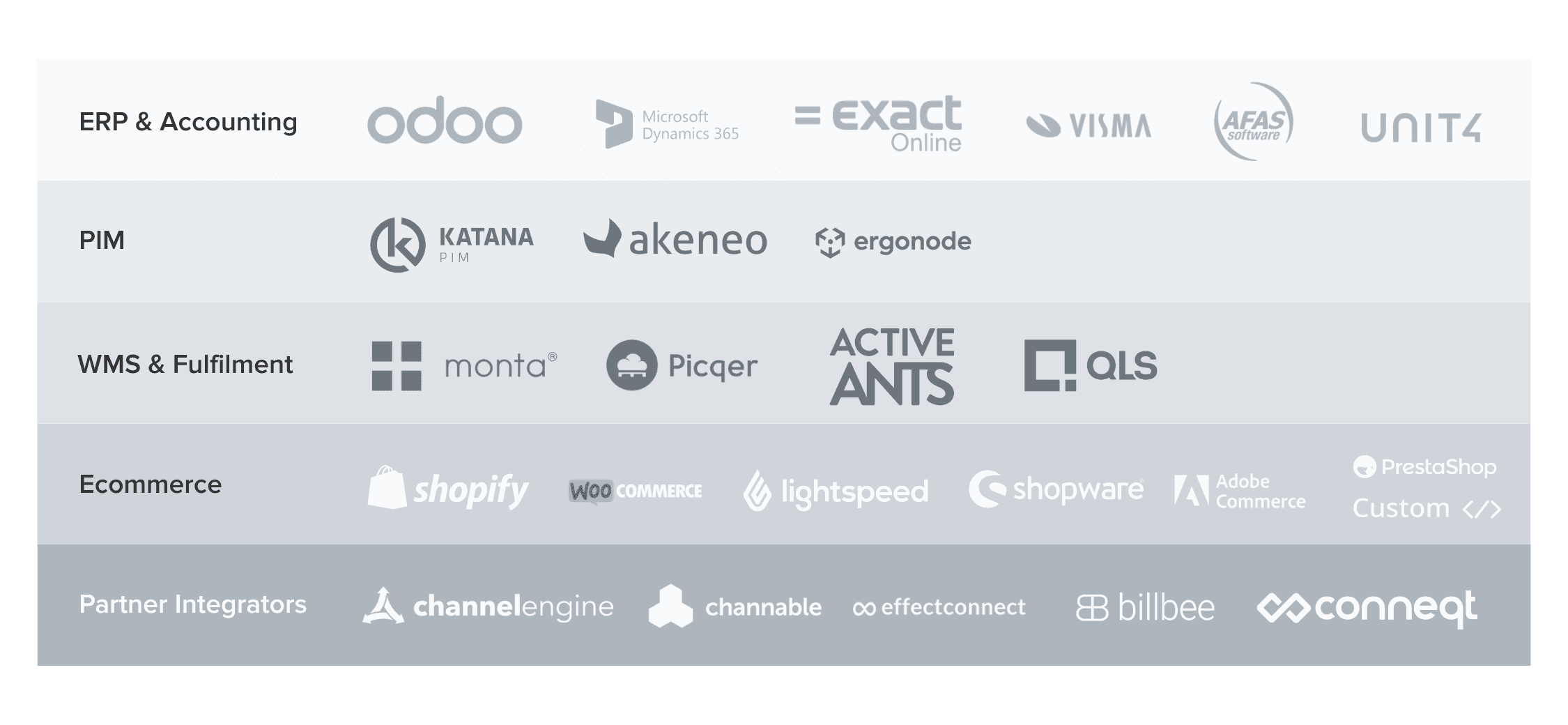
Orderchamp Cloud operates primarily within the ecommerce and integration layers of the B2B tech stack. It functions as a B2B Portal that lets brands offer a fully branded, self-service ordering environment, while connecting to existing systems such as ERP, accounting, and logistics tools.
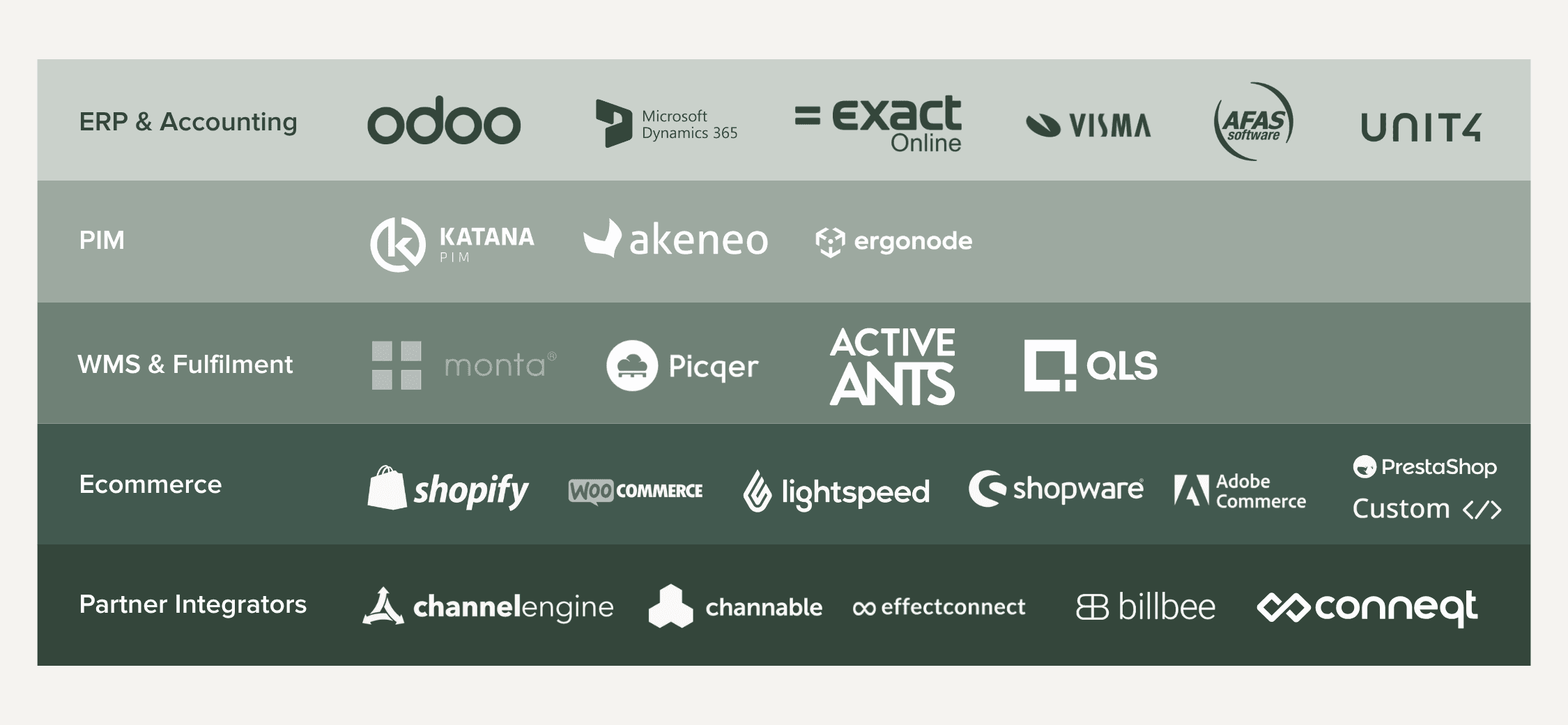
This dual role makes it a central component in modern B2B infrastructures. On the front end, it enhances the buying experience with a seamless, professional ordering interface. On the back end, it acts as an integration layer that synchronizes orders, inventory, and customer data in real time — reducing manual work and keeping every system aligned.
Over the past year, many brands have accelerated their shift toward more connected systems, as reflected in one year of Orderchamp Cloud, where the focus has been on simplifying complexity while scaling digitally.
By sitting between operational systems and the customer-facing experience, Orderchamp Cloud lets brands digitize their wholesale processes without replacing their existing infrastructure. It turns fragmented workflows into a connected ecosystem that supports both efficiency and growth.
The future of B2B tech stacks
B2B tech stacks are increasingly moving toward flexible, cloud-based (SaaS) architectures built around APIs and modular components. This shift lets brands adapt quickly to changing demands and integrate new tools without disrupting their existing setup. As digital expectations rise, the ability to deliver a seamless, automated, scalable buying experience will become a key competitive advantage.